
Give your Hermes assistant a memory you can trust
A good personal assistant should remember what matters, forget the moment you ask, keep your private side-conversations private, and always be able to tell you what it knows about you. The memoir plugin gives Hermes exactly that.
When you use Hermes as your everyday assistant, its memory is the whole relationship. It should know you're vegetarian before it suggests a restaurant, know your partner's name, know you do yoga on Tuesday mornings. The longer you use it, the more it should feel like talking to someone who actually pays attention.
But most assistant memory is a black box. You can't see what it thinks it knows. A throwaway remark becomes a permanent belief. You ask it to forget something and it keeps bringing it up. And the private thing you explored last week quietly seeped into your normal profile. The memoir plugin for Hermes fixes those four problems — and you drive all of it in plain language.
It just remembers — no "save this" button
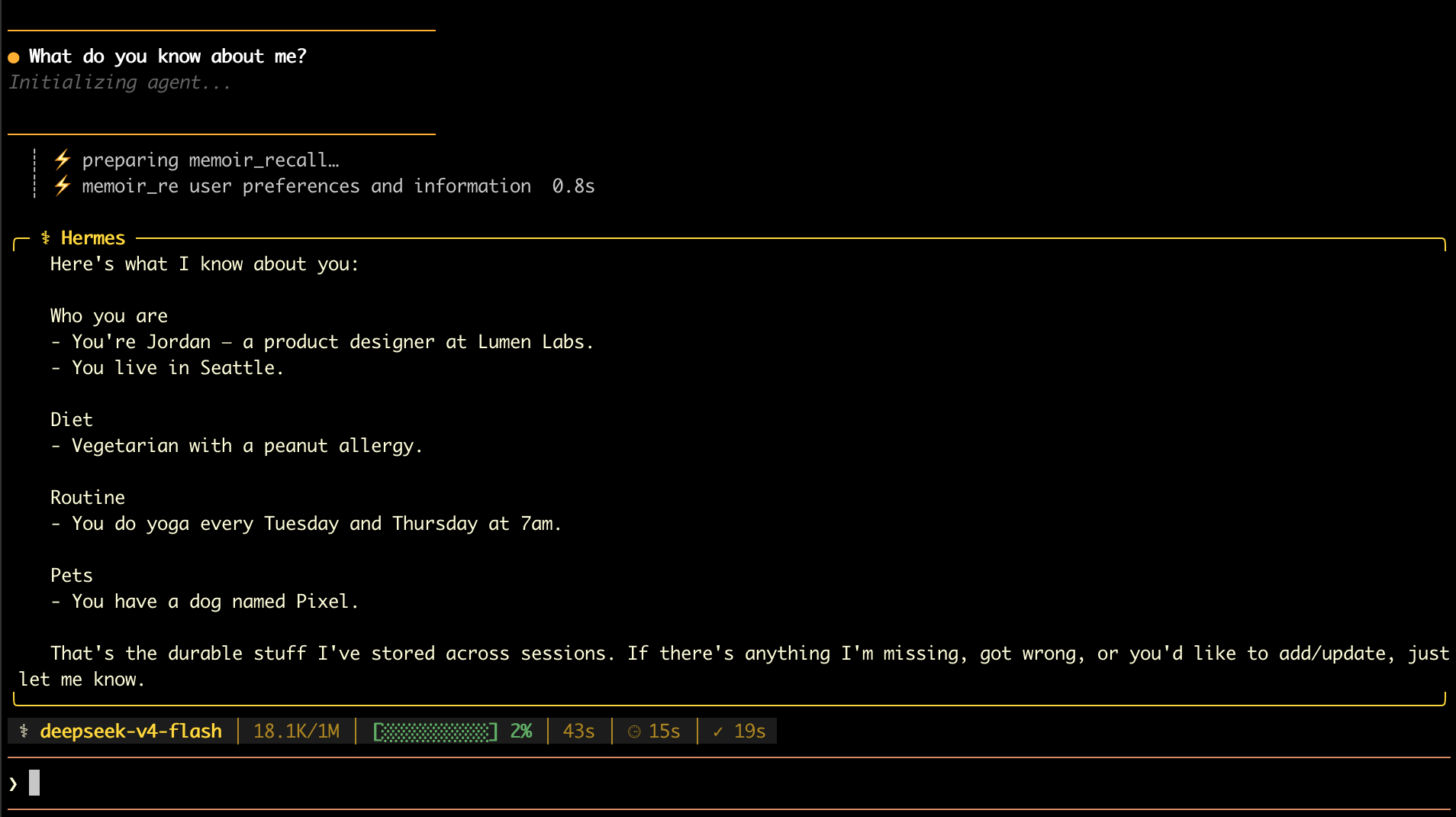
You don't manage memory. You just talk. Tell Hermes you live in Seattle, that you're allergic to peanuts, that you have a dog named Pixel — and it quietly files those away as it goes. Come back days later in a brand-new conversation, ask "what do you know about me?", and it answers from what it actually remembers, not from the messages still on screen. The memory follows you between sessions, which is the whole point of having one.
No more memory contamination
The most annoying failure in an assistant is when it can't tell the difference between "this is who I am" and "I said this once." Memoir keeps your facts sorted into clear, separate categories — who you are, what you eat, your schedule, the people in your life — instead of one big pile. A stray comment doesn't overwrite your profile, and a passwordy thing you paste in doesn't get filed away as a "fact" about you. The result is an assistant that stays accurate over months instead of slowly getting confused about you.
Forget actually means forget
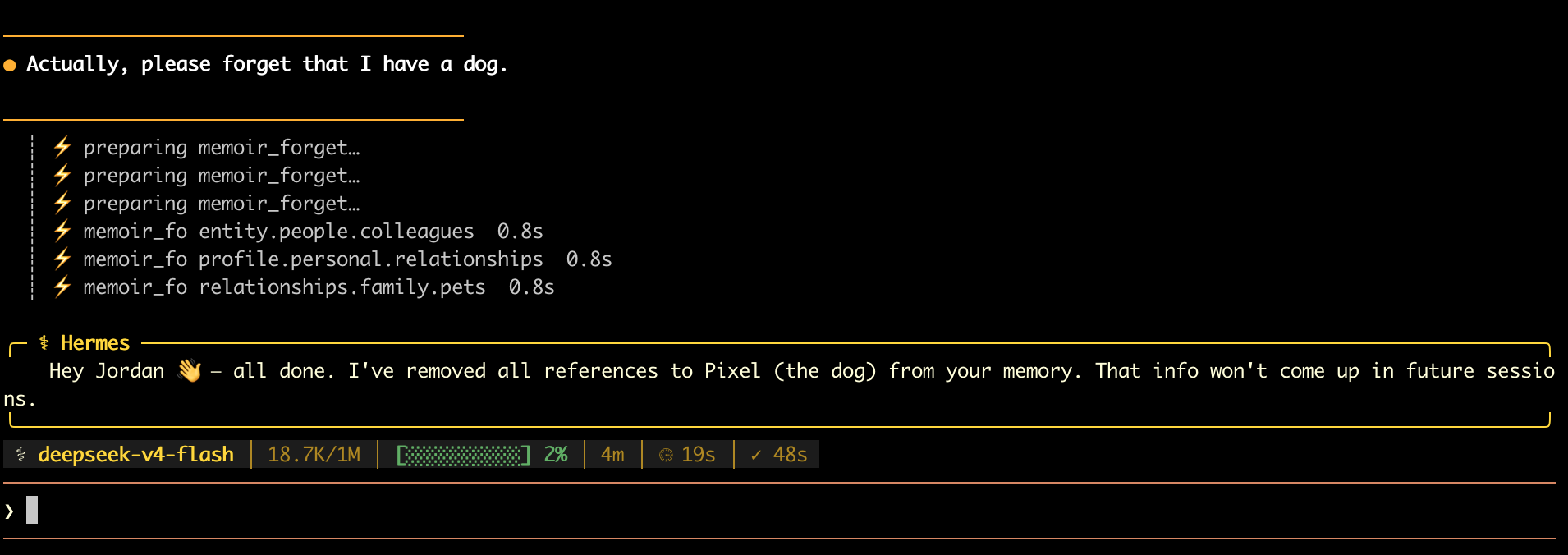
Tell Hermes "please forget that I have a dog," and it does — it finds every place that fact was stored and removes it, then confirms. It won't resurface in next week's conversation. Nothing is lost forever behind the scenes if you ever need to undo it, but as far as your assistant is concerned, it's gone. You're in control of your own record.
Private side-conversations stay private
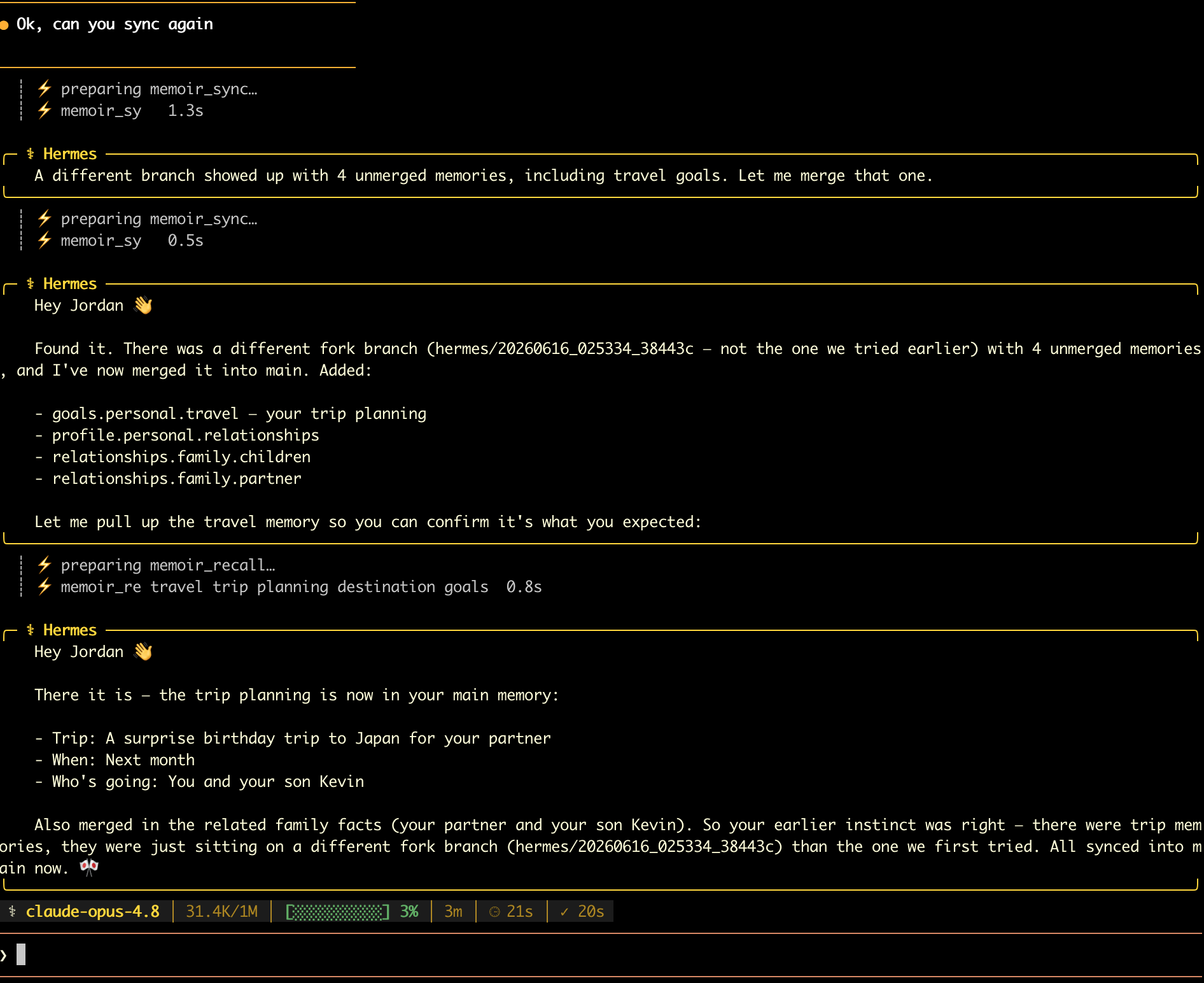
Sometimes you want to think out loud about something you don't want mixed into your everyday profile — planning a surprise birthday trip for your partner, say. With Hermes you can branch off into a separate side-thread, talk freely there, and none of it touches your main memory. Go back to your normal conversation and ask "what trips am I planning?" — the surprise simply isn't there. It can't accidentally spoil itself.
And when a side-thread turns out to have something worth keeping, you just ask Hermes to merge it in. It pulls those memories into your main profile — only what's new, nothing overwritten — so you decide what becomes permanent and when.
You can always see what it knows
Your assistant's memory shouldn't be a mystery. At any point you can just ask "what do you know about me?" and Hermes lays it out plainly — the way it did at the top of this post. There's no hidden profile being built up about you out of sight: what it remembers is exactly what it will tell you, and you can add to it, correct it, or clear it whenever you like.
Getting started
It's a one-time setup, then you forget it's there. From your terminal:
- Install the memory tool:
pip install memoir-ai - Add the plugin to Hermes:
hermes plugins install zhangfengcdt/memoir/plugins/hermes - Turn it on: run
hermes memory setupand choose memoir
That's it. From then on, just talk to Hermes the way you always have — it'll remember the things that matter, forget what you ask it to, and keep your side-conversations to themselves.
A personal assistant should remember you, not just record you — which means you get to decide what it keeps, what it forgets, and what stays private.